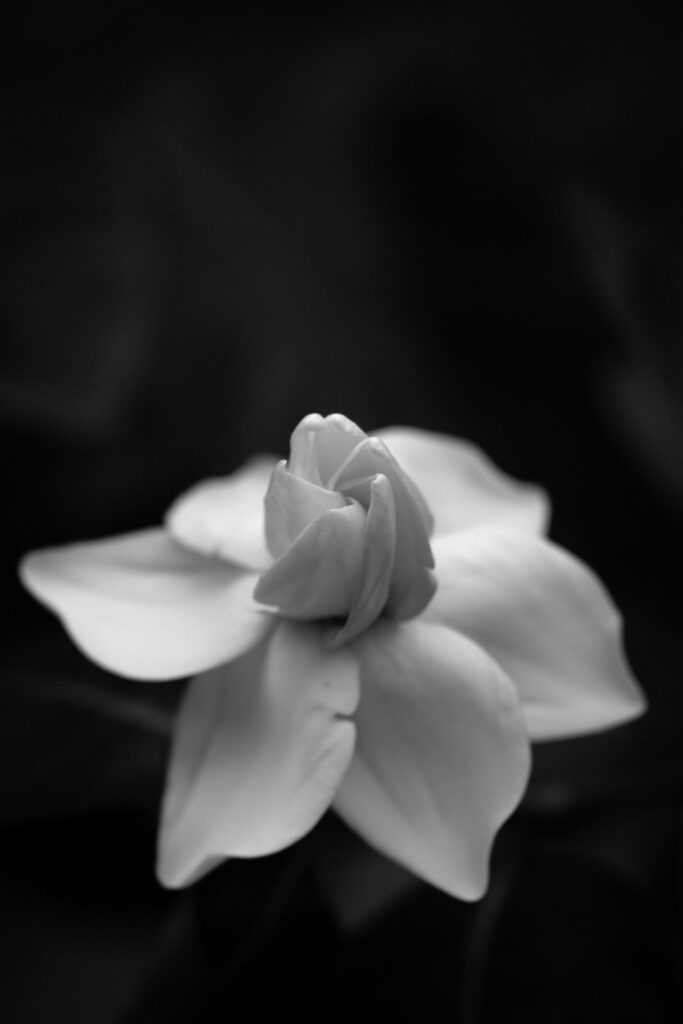
There is something faintly suspicious about flowers.
They sit there in gardens, parks, vases and wedding bouquets, dressed in unapologetic colour — crimsons, yellows, purples so enthusiastic they border on theatrical — and dare you not to photograph them. Entire memory cards have been sacrificed at the altar of petals. Instagram, I am told, is essentially one long botanical parade.
And because everyone photographs flowers in colour — understandably, reverently, and sometimes aggressively — I decided, in what I considered a moment of quiet rebellion, to photograph them in black and white.
This is not because I dislike colour. I am very fond of it. I approve of blue skies and red buses and the occasional well-behaved sunset. But flowers are almost too good at colour. It feels, at times, like cheating. A bright geranium can carry a mediocre composition the way a flamboyant waistcoat distracts from an otherwise dull personality. And besides I’ve already got a gallery full of colourful flowers.
So I thought: what happens when you take away their greatest advantage?
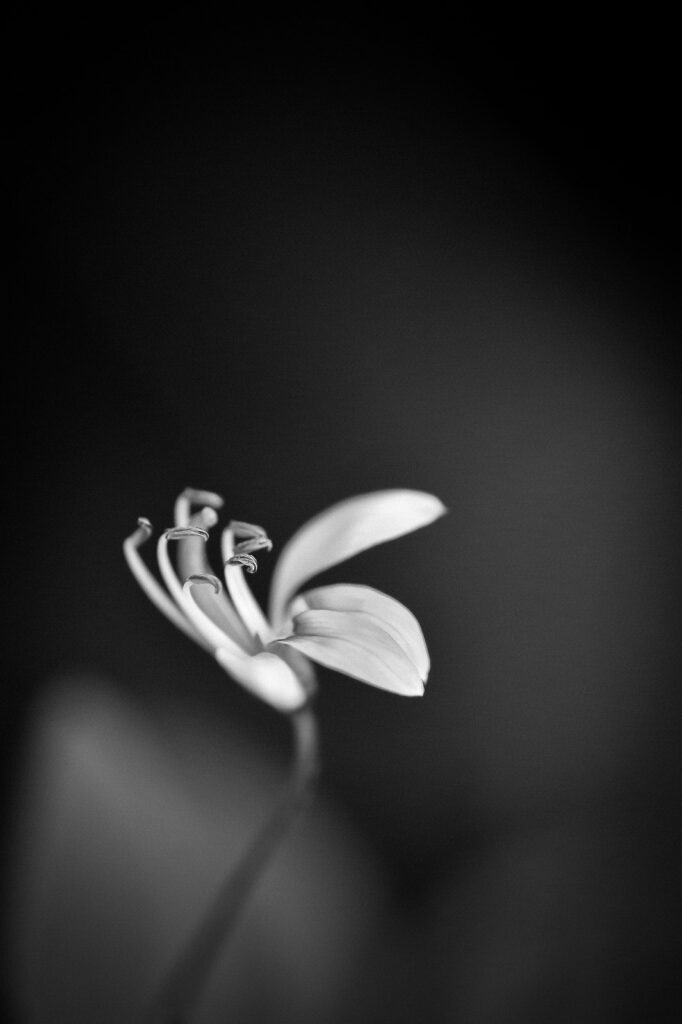
When you remove the crimson from the rose, the violet from the iris, the cheerful yellow from the sunflower — what remains?
Structure. Texture. Form. Light. Shadow. Character.
In other words, photography.
The first time I switched my camera to monochrome and pointed it at a bed of flowers, I felt faintly scandalous. It was like serving strawberries without cream. Surely someone would object. Surely the flowers themselves would protest.
But they didn’t. They simply stood there, as flowers do, tolerating my experiments with botanical patience.
Without colour, the petal becomes less about its hue and more about its shape. The gentle curl at the edge, the slight tear, the veins running like delicate cartography across its surface — all suddenly far more important. Light becomes your paintbrush. Contrast becomes your drama.
One begins to notice things.
In colour photography, a bright bloom demands attention first. In black and white, the eye wanders differently. It traces lines. It pauses at texture. It lingers where light meets shadow. The absence of colour is not a loss; it is an invitation to look more carefully.
Of course, not every flower cooperates.
Some, once stripped of colour, look faintly disappointed — like a peacock having misplaced its tail. That is when composition must step in and do the heavy lifting. You begin to think about background. About negative space. About isolating a single bloom against a dark hedge so it emerges like a quiet thought in a noisy room.
You start chasing light instead of colour.
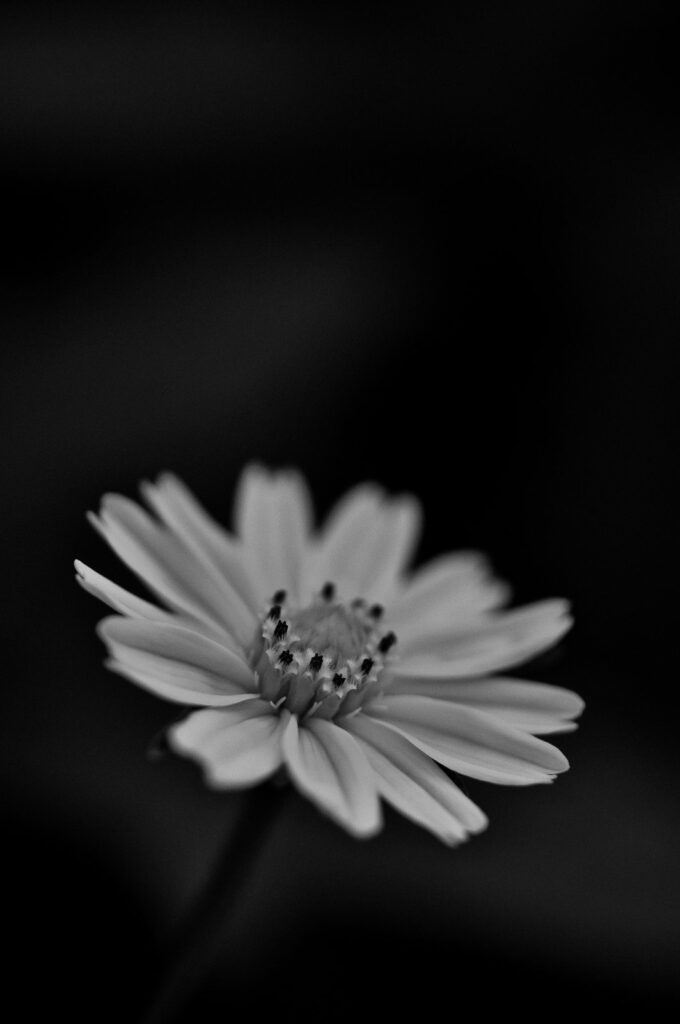
Early mornings become particularly rewarding. The low sun creates shadows that carve depth into even the simplest daisy. Side lighting turns petals into sculptural forms. Backlighting transforms thin petals into glowing parchment. Without colour to distract you, you begin to see flowers as architecture.
Botanical cathedrals, if you will.
There is also a delightful irony in presenting flowers — nature’s most enthusiastic ambassadors of colour — in monochrome. It forces the viewer to reconsider them. We are so accustomed to thinking of flowers as bright and cheerful that we forget they are also intricate, structured, sometimes even dramatic.
Black and white reveals their seriousness.
It also reveals their imperfections. A torn edge, a bruise, a curling leaf — all far more noticeable when not disguised by vibrant tones. But those imperfections add character. A perfectly symmetrical bloom is lovely; a slightly weathered one tells a story.
And in the end, that is what makes the exercise worthwhile.
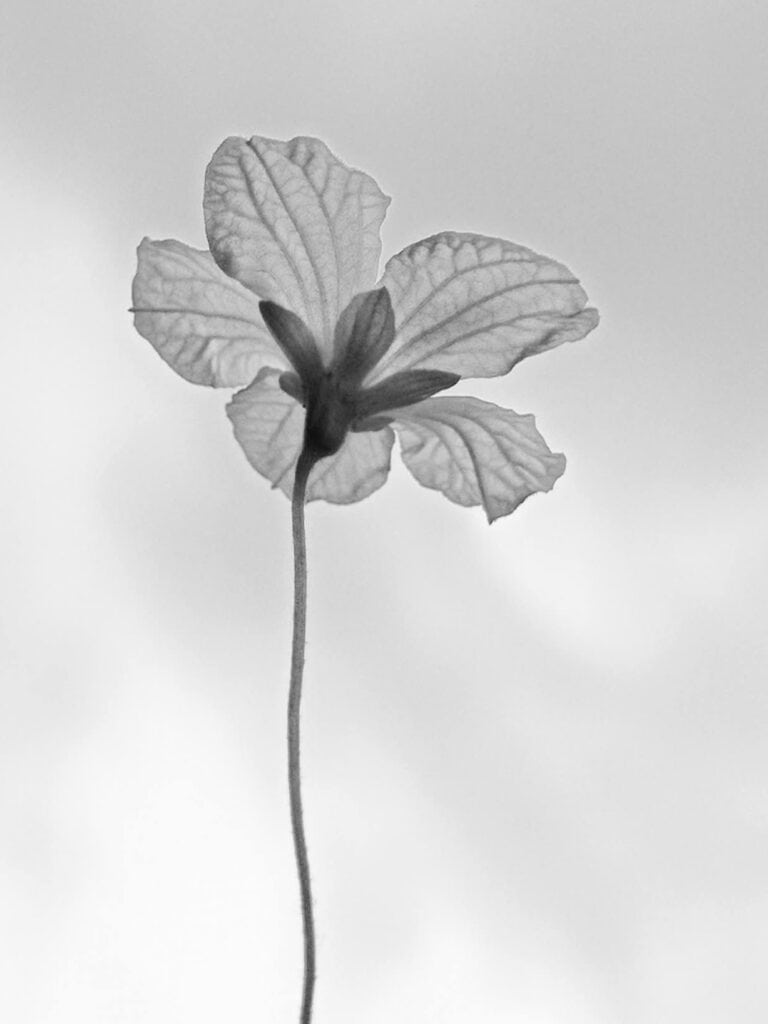
When everyone else is pointing their lenses at colour, there is something quietly satisfying about stepping aside and saying, “Yes, but what if we didn’t?” It is not about being contrary for the sake of it. It is about challenging yourself to see beyond the obvious advantage.
Flowers will always be colourful. That is their business.
Your business, as a photographer, is to make them compelling even when you take that colour away.
And if, in the process, you discover that a humble marigold can look like a Renaissance sculpture under the right light — well, that is a rather splendid bonus.
Just don’t tell the marigold. It might become insufferable.