There are two kinds of people who chase sunsets. The first are poets who scribble lines about golden skies and fading light. The second are photographers who drive far too many kilometres, carry far too much gear, and still complain that the sun has not positioned itself properly for the composition.
On this particular afternoon, I belonged very firmly to the second category.
A few days earlier, Brendon, Gautam and I had hatched a brilliant plan: drive a fair distance beyond Lonavala in search of a worthy sunset. The plan, like most plans involving photographers, was wonderfully vague and entirely dependent on “finding a nice spot somewhere”. And hoping it doesn’t rain.
Naturally, the first important task was lunch.
Now Gautam, being a man of useful connections, casually mentioned that a neighbour of his owned a small Maharashtrian restaurant nearby. This immediately elevated the outing from “photography trip” to “culinary expedition with incidental photography”. We stopped there, fully intending to behave like respectable, paying customers.
Instead, we were treated like long-lost relatives who had finally returned home.
Dish after dish appeared at the table with alarming generosity. There was fragrant bhakri, spicy curries, fried fish and the sort of comforting food that makes you briefly reconsider every life decision that led you away from home cooking. Every time we thought the meal was finished, another plate appeared. Along with Solkadhi.
“Try this also,” our host insisted.
At some point we realised that the phrase “on the house” was being applied rather liberally.
After thanking our host profusely and rolling ourselves out of the restaurant with great dignity (or what remained of it), we resumed our noble quest for a sunset.
Finding a good location, as it turns out, is a bit like looking for a parking spot in a crowded market: everything looks promising until you actually get there. We wandered down roads, peered over hilltops, rejected perfectly decent views, and debated compositions like three mildly confused art critics.
Eventually we stumbled upon a spot that made us all stop and say the same thing:
“This could work.”
There was only one small complication.
It was private property.
Now, photographers faced with a “Private Property” situation have three options:
- Leave politely.
- Pretend not to see the sign.
- Attempt diplomacy.
Being law-abiding citizens (mostly), we chose diplomacy. After a brief and rather earnest conversation with the manager—who was understandably suspicious of three grown men carrying tripods—we managed to convince him that we were harmless photography enthusiasts rather than terrorists.
Permission granted.
Tripods deployed.
Shutter release ready.
There was an interesting incident involving Gautam and a borrowed cigerette but I remained focussed on photography.
And then came that wonderful moment photographers politely refer to as magic, which is essentially nature behaving itself for once. The gloomy sky slowly softened, colours deepened, and the entire landscape looked as though someone had decided it was time to take long exposures.
Click.
The shot was taken.
Later, when I shared the photograph with the PCI gang, a few people kindly suggested that the colours must have been heavily post-processed. Which is flattering in its own way, though slightly unfair to the weather, which had clearly done most of the work.
So, for the benefit of the sceptics, I’ve also included a photo of the Nikon Df’s LCD screen showing the original capture—evidence that sometimes nature does in fact get the colours right without consulting Lightroom first.
All in all, it was a rather successful expedition.
A long drive, an unexpectedly excellent lunch, a small victory of negotiation, and a photograph worth bringing home.
Not a bad way to spend a day.
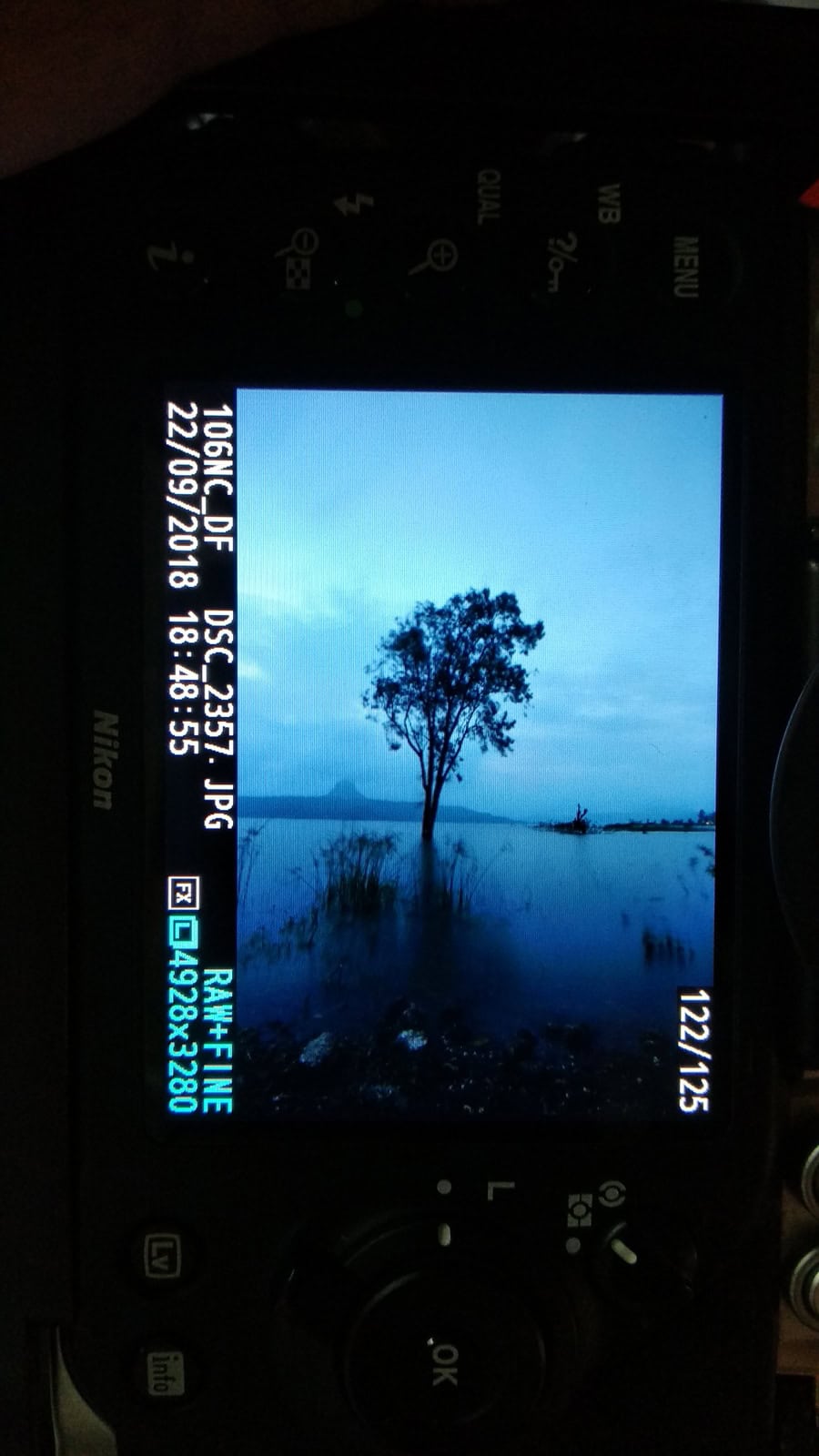
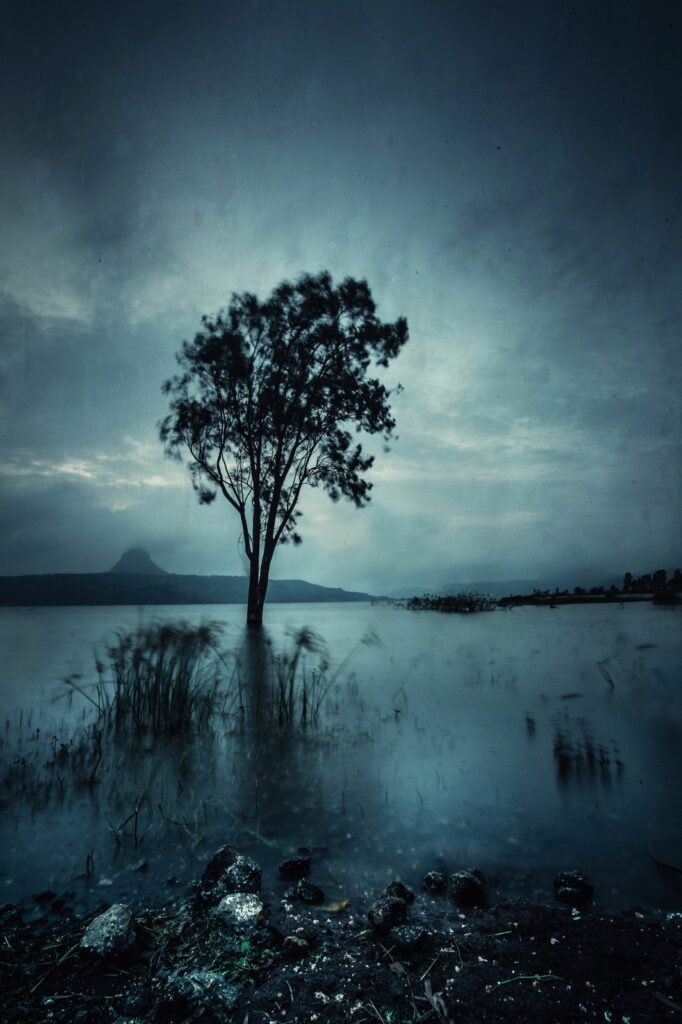
You can view the RAW file on the Nikon Df LCD and then my final Jpeg after WB and other adjustments