There was a time when taking a photograph involved patience, uncertainty, and occasionally mild financial recklessness.
You bought a roll of film with the seriousness of a man buying ammunition before a small war. Negatives mostly, slide film if you were feeling extravagant. Every frame mattered. Every click cost money. Photography, therefore, was less of a machine gun exercise and more of a carefully aimed single shot.
Today, of course, people take 900 photographs of a sandwich before eating it cold under fluorescent lighting while informing the internet that they are “living in the moment.” Humanity has made astonishing progress.
I used to shoot film many years ago. Not because it was fashionable or vintage or artisanal or any other word invented by marketing departments to justify expensive coffee. I shot film because that was photography. Simple as that. Cameras had weight, shutter sounds had character, and you waited days before discovering whether you were a genius or an idiot.
Usually the latter.
And yet, there was magic in that waiting.

Film slowed the world down. You walked more carefully. Observed more deeply. You learned to trust your eyes instead of a screen. You became part photographer, part gambler, and part chemist. Sometimes the photographs came back soft, crooked, badly exposed or mysteriously containing someone’s thumb. But even failures possessed honesty.
Digital photography is brilliant. Efficient. Miraculous, even. My phone today has more computing power than the machines that once sent men to the moon, which is comforting because humanity now mostly uses that power to photograph cappuccinos and traffic jams.
But like my friend Salil says, film has soul.
Not because it is technically superior. It isn’t. Any modern camera can outperform most old film cameras in almost every measurable way. But measurable things are not always the important things. Nobody falls in love because of dynamic range.
Old things carry memory differently.
An old camera remembers the hands that held it. The streets it wandered through. The dust it collected in forgotten cupboards. The journeys it survived in worn leather bags smelling faintly of rain and tobacco and railway stations.
My old cameras still sit quietly on shelves today. Solid mechanical creatures made from brass, glass and stubbornness. Cameras from a time when things were built to last longer than software updates. Some of them probably still work perfectly. Along with my watches and pens. In fact, they may continue working long after I am gone, which is both comforting and mildly rude.
One day, someone may pick up one of those cameras after I’ve disappeared into the great darkroom in the sky. They may load a roll of film into it and hear the same shutter sound I once heard standing in some forgotten alleyway or hillside town. The camera will not know I am gone. Machines rarely indulge in sentimentality. Humans do enough of that for everybody.

But perhaps somewhere inside those old negatives and faded contact sheets are fragments of a life quietly preserved.
A rainy afternoon in Mumbai, an outing in foggy weather, a photography walk early in the morning, a tea stall near a railway crossing, a motorcycle parked beneath a crooked lamp post, the summit of a mountain after a long hard climb, a friend now older, a city now changed, a younger version of oneself trying very hard to appear artistic while pretending not to sweat in summer heat.
Photographs become historical documents far sooner than we realise.
That old house you ignored becomes heritage, that old street disappears beneath glass towers and metro stations, that old motorcycle becomes collectible, that mountain peak is no longer in the city you once lived in, that old man reading a newspaper beneath a banyan tree becomes a memory nobody else remembers.
Perhaps that is why nostalgia matters.

Not because the past was perfect. It certainly wasn’t. Most old cameras weighed approximately the same as agricultural equipment and film was expensive enough to trigger emotional damage. But older things demanded care. Attention. Repair. Loyalty.
Today everything is designed to be replaced.
Old things were designed to remain.
Old cities have this feeling too. Places where walls crack gracefully and time settles gently into corners. Cities where tea tastes slower and conversations last longer than battery life.
You feel it while walking through narrow lanes in old parts of town, hearing ceiling fans creak above faded bookshops and mechanics repairing motorcycles older than many startup founders.
Modern life worships speed.
Faster internet, faster delivery, faster replies, faster success.

And yet the best things in life rarely arrive quickly.
Friendship, Trust, Craftsmanship, Love, Good photographs.
Film reminds me of this every time I hold one of those old cameras again. It reminds me that slowness is not failure. Sometimes slowness is attention. Sometimes slowness is respect.
Perhaps that is why film photography still survives in this impatient world. Not as rebellion. Not as trend. But as memory. As ritual. As proof that some people still enjoy hearing the quiet click of something mechanical doing exactly what it was built to do.
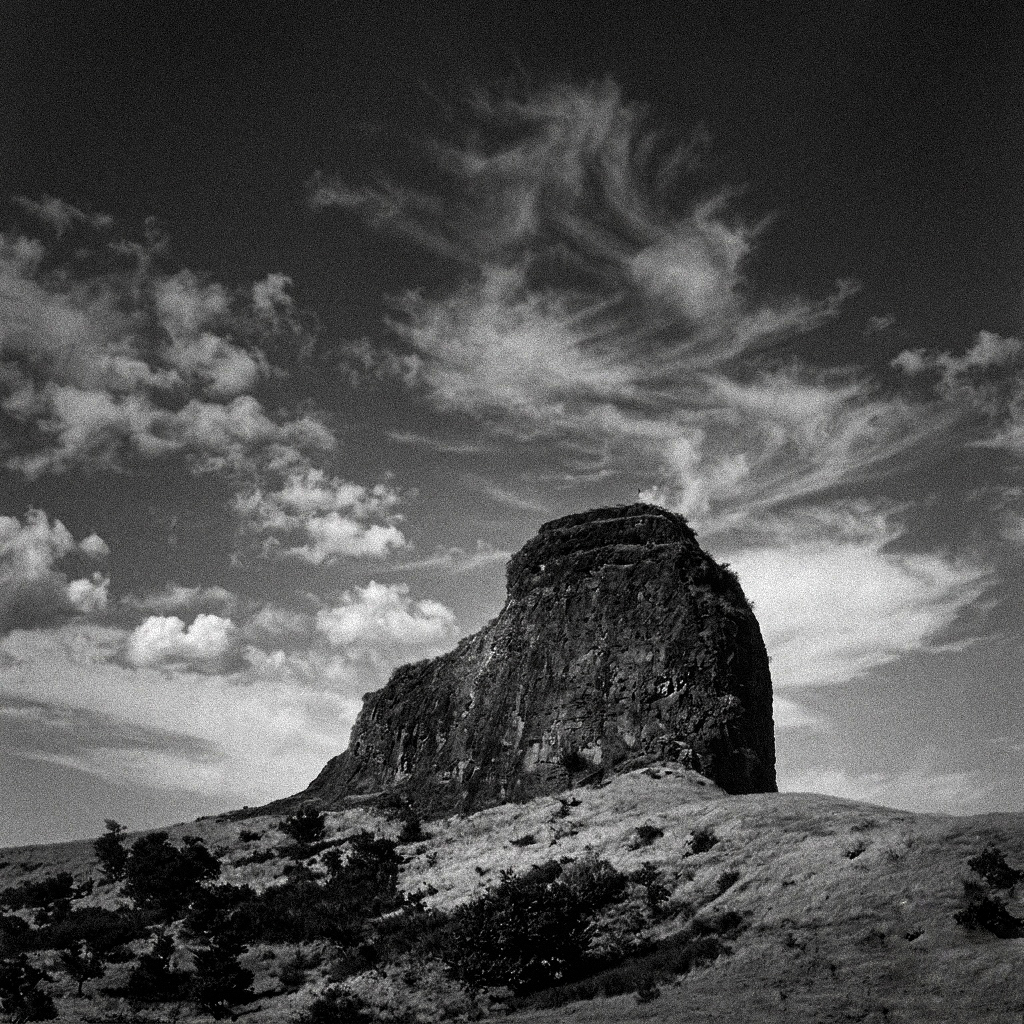
Long after apps vanish and hard drives fail and cloud subscriptions expire with the enthusiasm of tax notices, old, nostalgic people like Salil and me (and a few others at the PCI group) will still be holding on to their SLRs, TLRs and Rangefinders. Along with mechanical watches, old motorcycles, ink pens and other assorted things which people today are no longer interested in. And those old negatives /slides may still exist somewhere in a dusty cupboard.
Tiny rectangles /squares of captured time.
Still telling stories.
Still remembering.
Still alive in silver and grain.
Which is more than can be said for most social media platforms.
